
Plenary Talks
Emerging Trends in the Application of LLMs for Diagnostics, Prognostics and Maintenance of Manufacturing Equipment
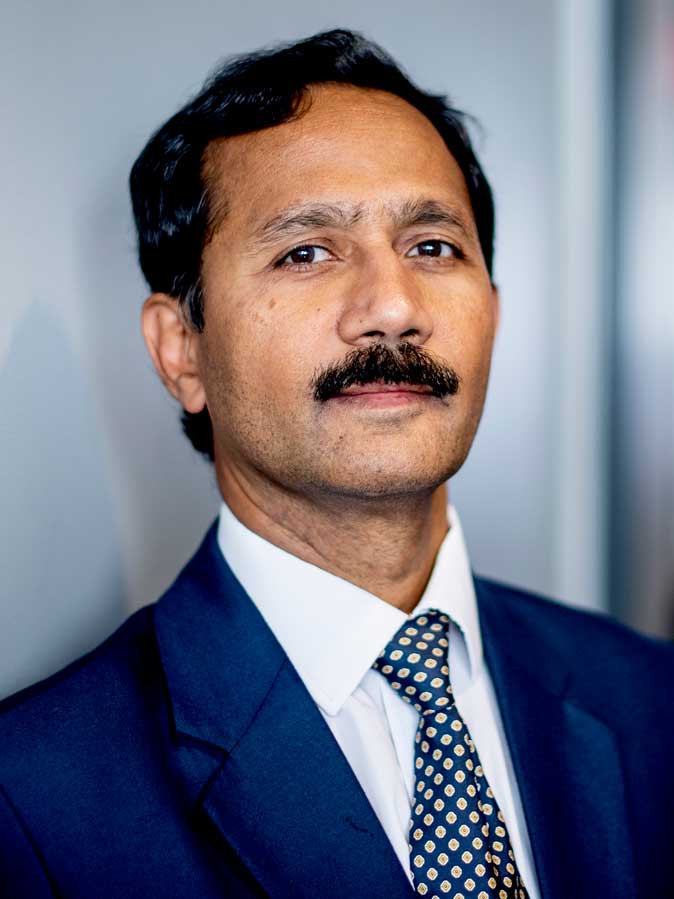
Sagar Kamarthi
Associate Dean for Graduate Education, College of Engineering
Professor of Mechanical and Industrial Engineering
Northeastern University
Abstract:
Large language models (LLMs) are AI systems that can generate and reason over text. They have entered the field of prognostics and health management (PHM) research at remarkable speed. To understand how deep that entry has gone, we conducted a bibliometric review of 3,570 LLM-for-PHM papers published between 2019 and 2025. We built a five-dimensional keyword taxonomy with 19 categories and 1,042 terms to classify the corpus. The results reveal where the field stands and where it falls short. Publications grew 500% from 2019 to 2024. Citation velocity remained steady at 1.4 to 2.0 citations per paper per year; however, the top 10% of papers in each annual cohort captured 64% of citations in 2019 and 89% by 2025. In other words, a small fraction of studies attracts most of the field’s attention. Furthermore, the study observed three trends: 1) starting in 2022, transformer-based AI models, which are the neural network architecture behind ChatGPT, were applied to PHM tasks; 2) from 2023 onward, LLMs and generative AI models, which produce text and synthetic data, were explored to address PHM issues; 3) beginning 2024, multimodal approaches, which combine text with images and sensor data, were investigated to perform PHM functions. The dominant research pattern pairs AI models with fault detection. Very few have tackled the use of LLMs for temporal degradation modeling, which is a harder problem. Assurance and risk research covers just 13.8% of research theme assignments. This is despite regulatory frameworks, including ISO 13374, IEC 61508, and the EU AI Act, that require auditability for safety systems. Assurance topics do not appear among the top research flows. The talk also presents a case study demonstrating an implementation path that addresses the adoption gap and the assurance gap within a single framework.
Biography:
Sagar Kamarthi is a Professor of Mechanical and Industrial Engineering and Associate Dean of Graduate Education of the College of Engineering, Northeastern University. He received his MS and Ph.D. degrees from Pennsylvania State University. He is the Founding Director of the Data Analytics Engineering Program and the Founder and Advisor of the Advanced and Intelligent Manufacturing Program at Northeastern University in Boston. His research interests are in machine learning applications in smart manufacturing and personalized medicine. He published over 200 peer-reviewed research papers and secured over $13 Million in research funding. He received the 2023 Outstanding Research Team Award, the 2022 College of Engineering Excellence in Mentoring Award, the 2021 Data Analytics and Information Systems Teaching Award from IISE, the 2020 University Excellence in Teaching Award from Northeastern University, the 2019 College of Engineering Martin W. Essigmann Outstanding Teaching Award, and the 2016 College of Engineering Outstanding Faculty Service Award.
Intelligent Steel Production through Digital Transformation
Takahiro Koshihara
Deputy General Manager, Cyber-Physical System R&D Department
Steel Research Laboratory, JFE Steel Corporation
JFE Steel Corporation

Abstract:
JFE Steel is promoting company-wide digital transformation (DX) to stabilize steel production, improve productivity, and achieve decarbonization. The long-term vision is the realization of intelligent steelworks that can autonomously optimize operations by integrating cyber and physical domains.
A core element of this DX strategy is the deployment of cyber-physical systems (CPS), which combine operational data, sensor information, and accumulated process know-how with advanced modeling, data science, and artificial intelligence. CPS enables real-time analysis, prediction, and operational guidance, supporting faster and more accurate decision-making across major steelmaking processes. At JFE Steel, CPS has already been implemented in key processes such as blast furnaces, converters, coke ovens, and rolling mills, contributing to improved operational stability and energy efficiency.
In parallel, JFE Steel is advancing in-house development of robotics to address hazardous, labor-intensive, and skill-dependent tasks in harsh steelmaking environments. These robots are designed to complement CPS by enabling remote operation, automation, and the transfer of skilled expertise. This presentation introduces representative applications developed in-house: a control system for molten iron temperature of blast furnace; a guidance system for fuel and power management by model predictive control; an autonomous mobile robot for cleaning the top of the coke oven; and so on.
Through the integrated application of CPS and robotics, JFE Steel is accelerating the realization of intelligent steel production. The presented technologies demonstrate how digital transformation can simultaneously address operational excellence, workforce challenges, and sustainability in the steel industry.
Biography:
T. Koshihara is a Deputy General Manager at the Cyber-Physical System R&D Department of JFE-Steel Corporation. He has worked as a researcher in inspection and measurement techniques in the steel industry. He has also served as a visiting researcher at the Fraunhofer Institute, a person in charge of facility construction at a steel plant, a chief of the Research Planning Department, and a Deputy General Manager of the company-wide development department of DX technology at the head office. He received his Master of Engineering degree (1997) from the University of Tokyo.
Contact information: t-koshihara@jfe-steel.co.jp
Data-Driven Evolutionary Manufacturing: Leveraging Digital Twin and Generative AI for Autonomous System Optimization
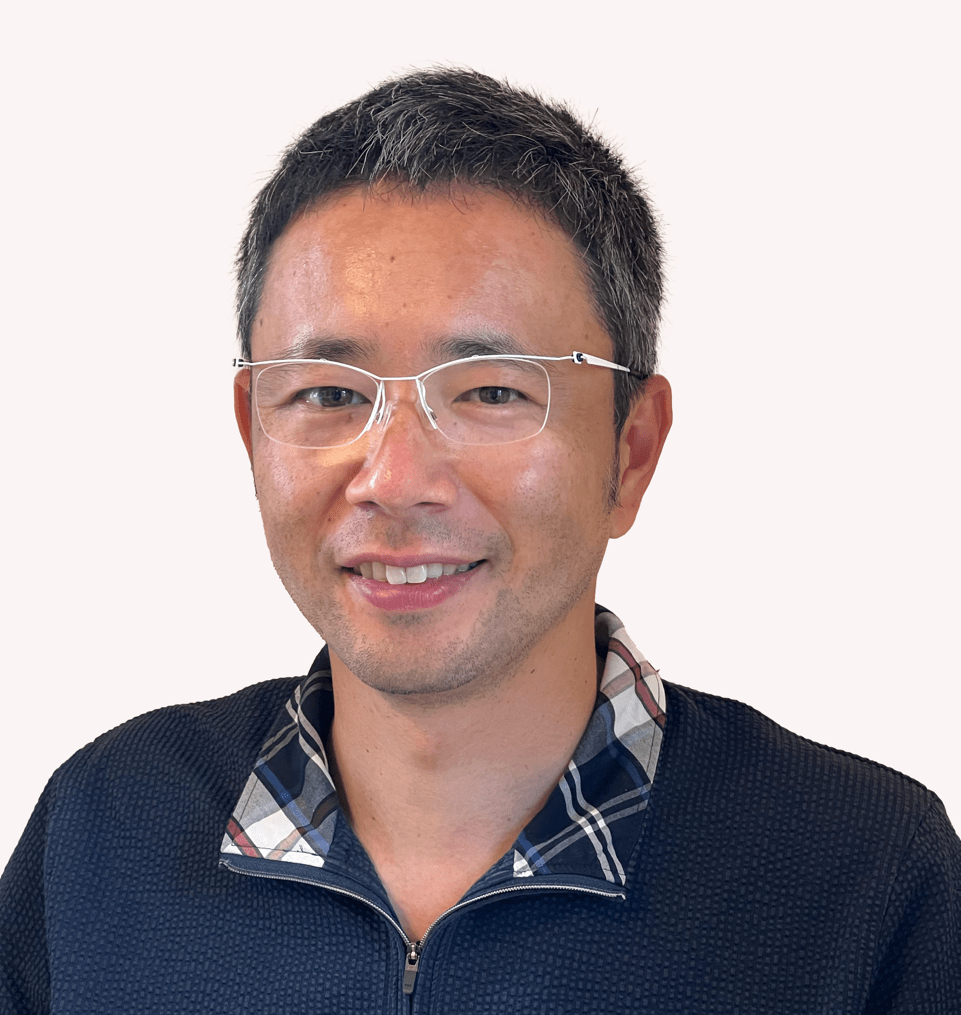
Shintaro Iwamura
OMRON Corporation
Industrial Automation Company
Controller Div., Product Business Div. HQ,
Distinguished Specialist of Technology, Ph.D.
Abstract:
While many smart factory initiatives focus on high-level IT integration and simulations, true autonomous manufacturing cannot be achieved without confronting the highly demanding, on-the-ground realities of the “Gemba” (location where value is created in operational floors). A critical barrier is the “invisible wall” between Information Technology (IT) and Operational Technology (OT)—the gap between asynchronous millisecond data and the strict 125 μs synchronous control required in fail-safe environments. Representing the Product Business Division in OMRON, I will introduce our practical approach to “Evolutionary Manufacturing.” Rather than massive infrastructure overhauls, we emphasize step-by-step commissioning and small starts to upgrade existing lines. We bridge the IT/OT gap through Semantic Digital Twins using OpenUSD, combining Large Language Models (LLM) and Vision Language Models (VLM) for autonomous multi-modal root cause analysis. By addressing unpredictable 4M variations and complex physical anomalies in high-density electronics packaging, this talk will demonstrate how AI can empower not only operators but all personnel working on the “Gemba”, turning real-world constraints into pathways towards practical autonomous system manufacturing.
Biography:
Shintaro Iwamura, Ph.D., is a Distinguished Specialist of Technology at OMRON Corporation within the Industrial Automation Company, Controller Div., Product Business Div. HQ. Since joining OMRON in 2006, he has been engaged in software development, particularly leading the software infrastructure development for an integrated development environment for industrial controllers. In 2017, he began leading the core development of a 3D simulation platform that integrates robotics and PLC simulation technologies. Currently, he oversees the research and product development of AI and digital engineering platforms for manufacturing equipment. His technical leadership focuses on advancing factory automation by merging advanced controller architectures with next-generation data systems, aiming to solve complex, on-the-ground challenges on the Gemba. He received his Ph.D. in Mechanical and Systems Engineering from Kyoto University in 2023.
Physics-based AI-enhanced Sensing and Control of Manufacturing Processes
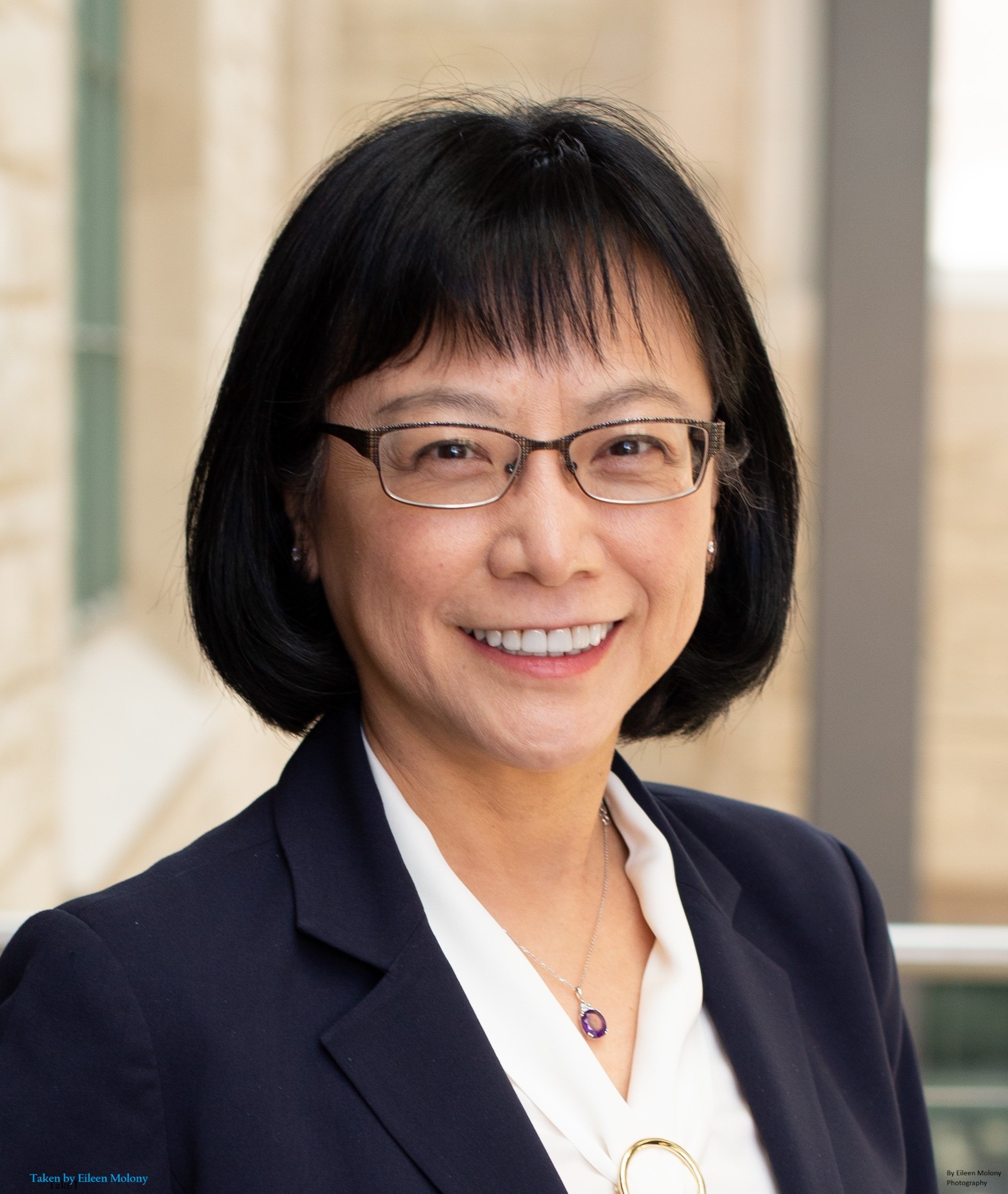
Jian Cao
Cardiss Collins Professor, Department of Mechanical Engineering (by courtesy)
Department of Materials Science and Engineering (by courtesy)
Department of Civil and Environmental Engineering
Director, Northwestern Initiative on Manufacturing Science and Innovation
Associate Vice President for Research Northwestern University
Abstract:
Current research efforts at our manufacturing group aim to advance high-mix flexible manufacturing capability through co-design of materials and processes and the execution of digital twins. In this talk, I will demonstrate our work in the development of differentiable simulation tools, sensing, and process control to achieve effective and efficient predictions and control of a material’s mechanical behavior in metal additive and metal forming processes. Our solutions particularly target three notoriously challenging aspects of the process: long history-dependent properties, complex geometric features, and the high dimensionality of their design space.
Biography:
Cardiss Collins Professor Jian Cao (MIT’Ph.D, MIT’MS, SJTU’BS) specialized in innovative manufacturing processes and systems, particularly in the areas of deformation-based processes and laser additive manufacturing processes. She is the Founding Director of the Center on Manufacturing Science and Innovation at Northwestern, known as NIMSI. Prof. Cao is an elected member of the National Academy of Engineering (NAE) and of the American Academy of Arts and Sciences (AAA&S). She is a Fellow of American Association for the Advancement of Science (AAAS), ASME, the International Academy for Production Engineering (CIRP) and SME. Cao was the Editor-in-Chief of Journal of Materials Processing Technology. Prof. Cao now serves as an Associate Vice President for Research at Northwestern, Board of Directors of SME, and Board of mHUB – accelerator for hardtech innovation and manufacturing in Chicago.